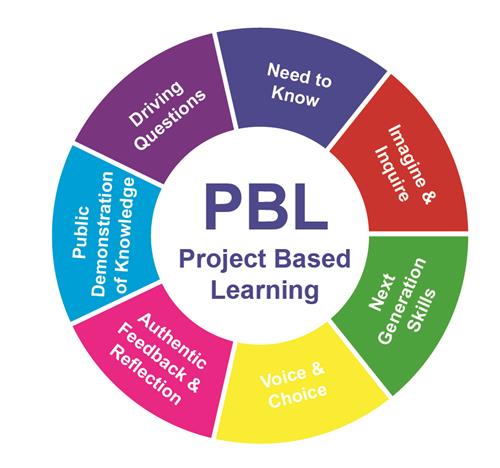
What is PBL?
Project Based Learning or PBL is when students make projects to answer a question of some sort that they have or a driving question that doesn’t have a direct answer. The students share what answers they have with someone else like a professional or another class and get critiqued by others so they can try to make the project better and see if they can get a better answer to the driving question(s) and understand it in a better way. PBL can help students have a deeper understanding of the content.
An example of PBL that I have done this year at DRSS would be the Storybook project. First, we made a few ideas for our story which had to have a wellness principal of some sort teaching the children about it. Second, we came together with our group and discussed our ideas about which story we should do and chose what type of story and page size. Then, we kept revising our draft, got peer critique once we got to our final draft which had been critiqued by the teachers. Next, we chose our color pallet and made pictures. Then, we kept trying to get our images approved by the teachers and eventually, they were. Next, we had to put it all on a PowerPoint of what our book would be and center the text and images. Then, we had to research businesses and people who might be interested in having our book, got their contact information if it was available, and compiled a bunch together and decided on the top three we wanted and when our group number was called, we said the one we wanted the most and if it wasn’t taken we could have it (it wasn’t taken). Lastly, we had to send emails and reply if we got a reply from them and sent a follow-up if we didn’t get a response soon. This helped me learn a lot. This helped me learn about wellness principles and the struggles of making a book and what makes a book good. I learned a lot about plot because I had to come up with a good plot. Secondly, it helped me learn a lot about the struggles of making a book because there were many set backs and we even now still don’t have a reply to our email so a struggle could definitely be that someone may not reply to your request to give them your book. Another thing it helped me learn a lot about was wellness principals because we had to come up with ideas for books and actually make the entire book about wellness principals (we chose conflict resolution) and had to demonstrate how to use it three times or more. We had to constantly look book at the wellness principals and if we messed it up, the teachers would let us know about what we missed or what part doesn’t follow wellness principals. Because I had to elaborate and show specifically how to use the wellness principals of conflict resolution, I can show them in the real world and help others with it. I can tell them to you. Just ask. Even if you didn’t ask, for proof, here are the three for our book: Ask an adult for help, ask a friend for help, and use an I-message. Because the first two are self-explanatory, I’m going to explain the last one because you probably don’t know what that is. An I-message is when you try to explain how you feel about something by starting the sentence with I and never using any words that blame the other person in any way because that could spark conflict again when you’re trying to resolve the conflict. Finally, the driving question was “how can we demonstrate wellness principals to 3rd through 5th graders in an age appropriate way that appeals to children?”. Again, like I said, the driving question has many answers like always so here are the answers I got: make the story about something likeable like animals, stick to a color pallet so it doesn’t go crazy with colors and not look good, don’t have anything that has something telling kids something like “get plastic surgery” with something like a donut who is a character getting new filling or something violent like animals who are both characters hunting each other for food, and there are many other answers but those are just a few. Pictured below the following links is an image of the first image I created for the storybook project which is the project I have been describing.
Links
I have two things I would like to show you. Click here for my reflection over how I have grown this year. Click here for my portfolio from last year so you can see how much better this one is and also see how I grew last year.